
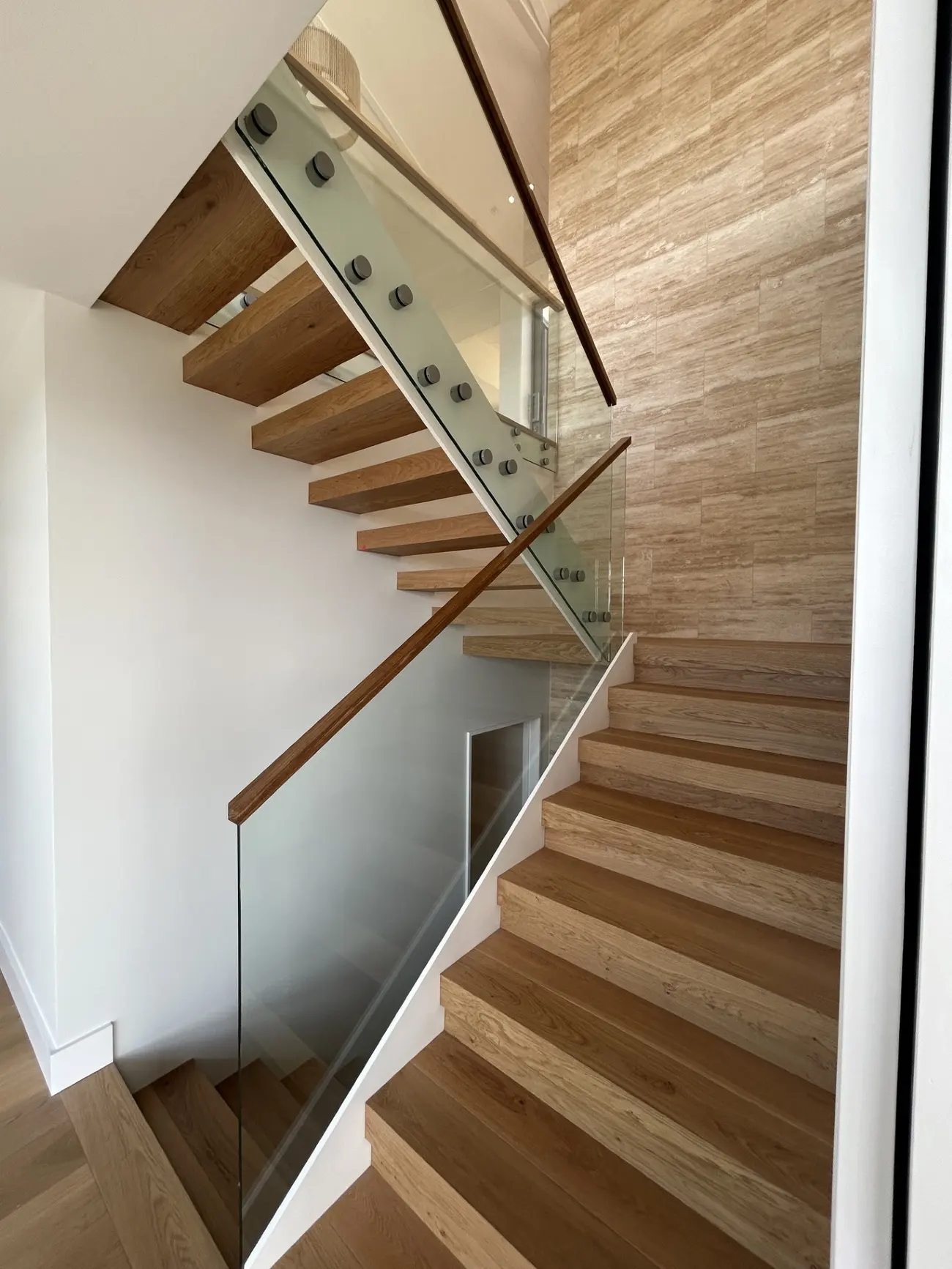
Frameless glass balustrades in Auckland
Decks, stairs, balconies and mezzanines. An unbroken view, engineered to code.
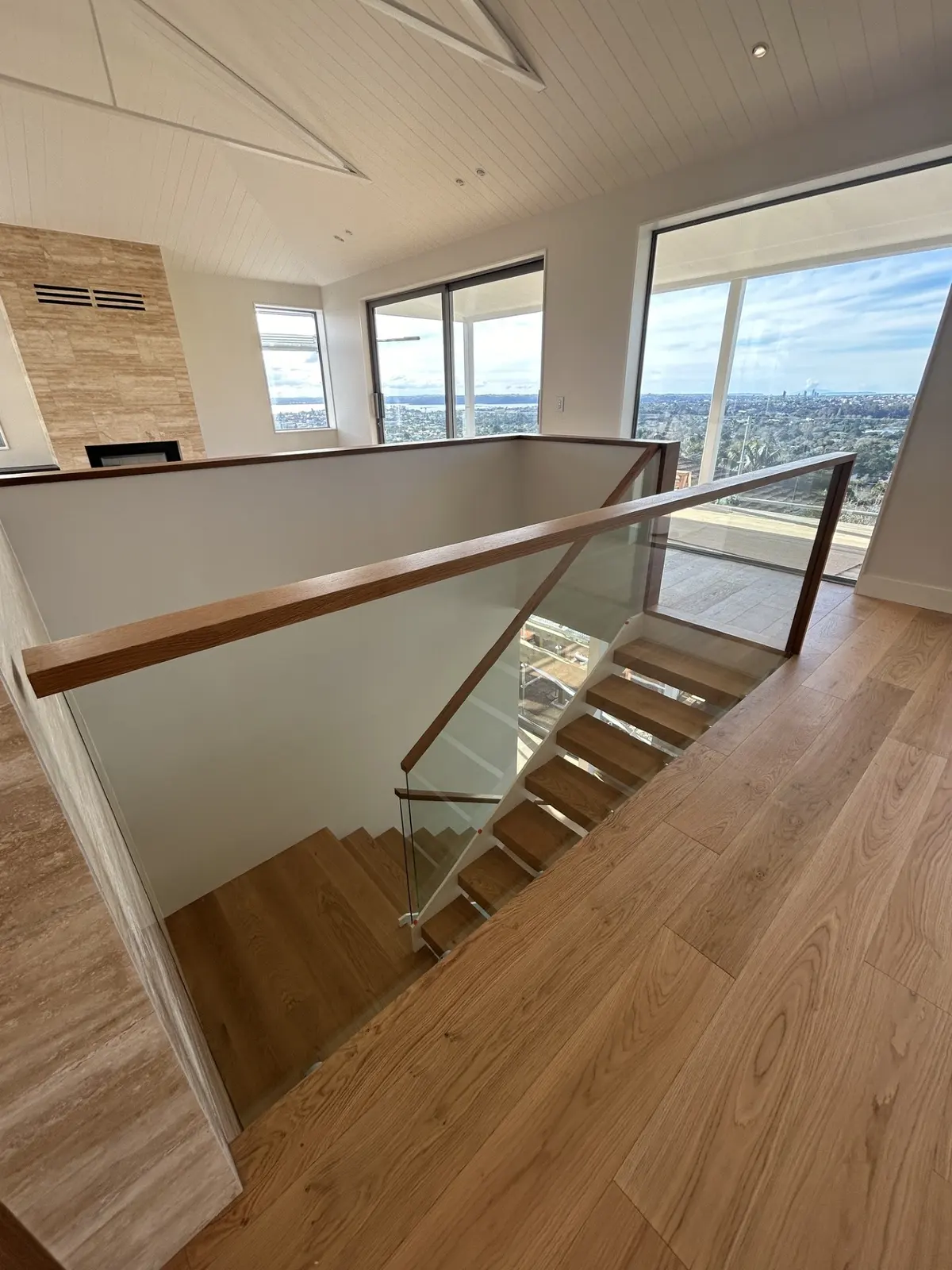
A balustrade is a barrier first and a feature second, and both matter. Our frameless and slimline systems give you an uninterrupted line of sight over a deck, down a stair or across a mezzanine, without the clutter of posts and top rails. Every panel is Grade A toughened safety glass, engineered and fixed to meet the New Zealand Building Code.
At a glance
- Frameless, semi-frameless and mini-post systems
- Deck, balcony, stair and mezzanine balustrades
- 12mm Grade A toughened safety glass
- 316 marine-grade stainless fixings for coastal sites
Systems to suit the site
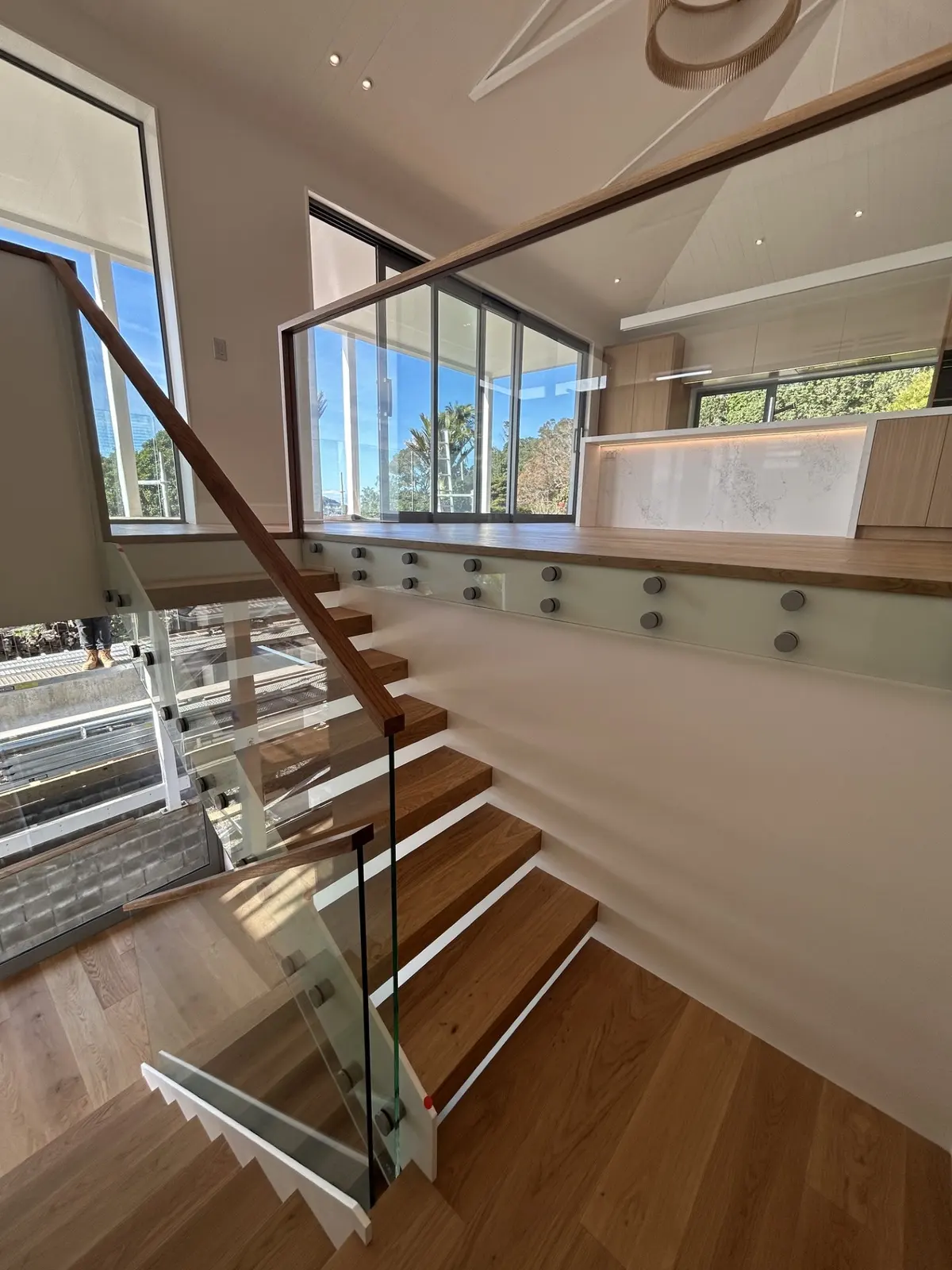
Frameless standoff
Glass fixed with discreet stainless standoff buttons off a fascia or slab. The cleanest, most minimal look for decks and balconies.
Spigot fixed
Panels held by slim floor-mounted spigots. Robust, popular for decks and pools, and quick to install.
Channel fixed
Glass set into a continuous base channel for a crisp, floating appearance with no visible fixings at all.
Semi-frameless post
Slimline stainless or powder-coated posts between panels. A tidy, sharper-priced option that still opens up the view.
Numbers a glass balustrades must hit.
minimum barrier height for decks, balconies and landings
minimum barrier height alongside stairs
toughened Grade A glass in a frameless balustrade
marine stainless fixings on coastal sites
Made for the way you will use it.
- Exterior decks and elevated balconies
- Interior and exterior staircases and landings
- Mezzanine and void edges
- Juliet balconies and window barriers
- Wind screens and shelter glazing
Choose how the glass is held.
We install BelAire hardware, designed in New Zealand and named for our own landmarks. The fixing you choose sets the look, so here is what each one does.
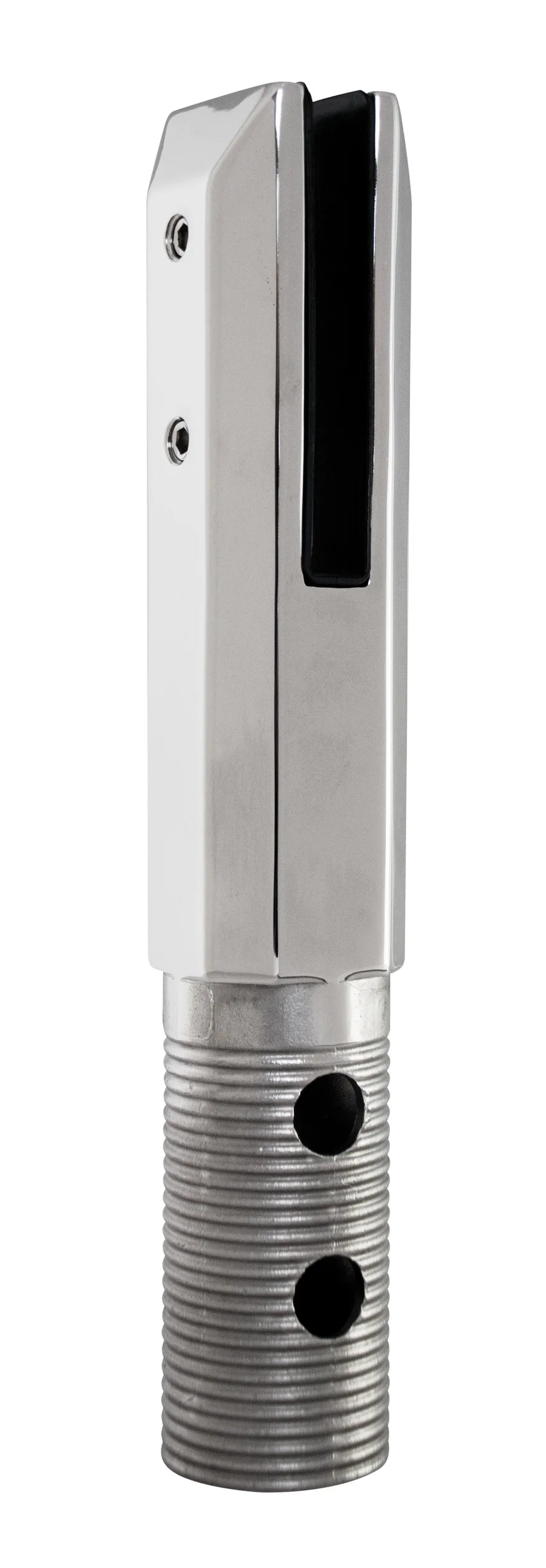
Tekapo
Core drill spigot
Set into a cored hole in concrete for the strongest, cleanest fix. Nothing on show but the spigot itself.
Best for: Concrete pool surrounds and paving
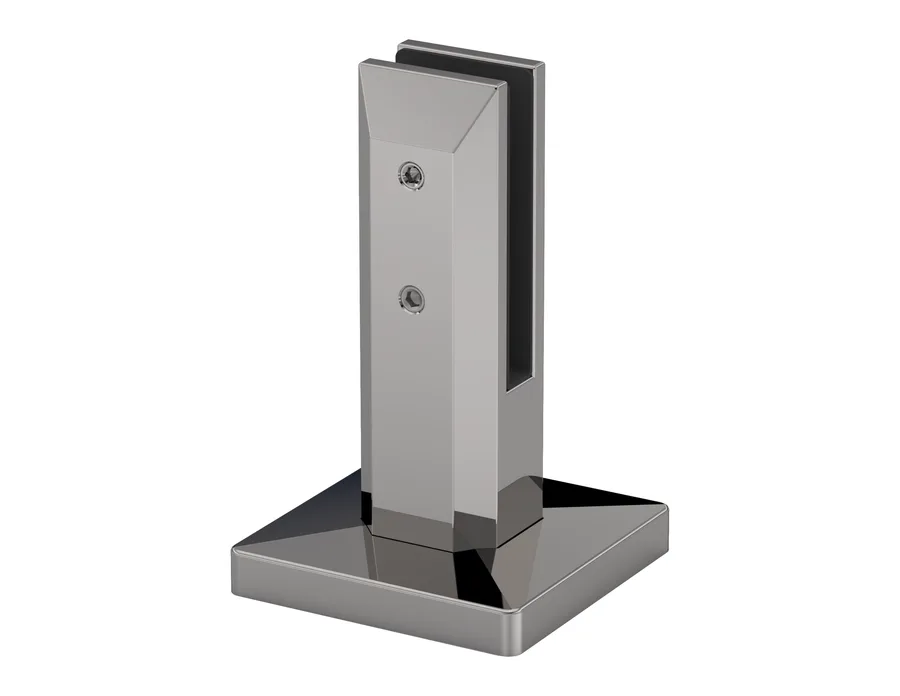
Tekapo
Surface mount spigot
Bolts down onto a finished surface, so it suits retrofits and timber decks where coring is not an option.
Best for: Decks and existing paving
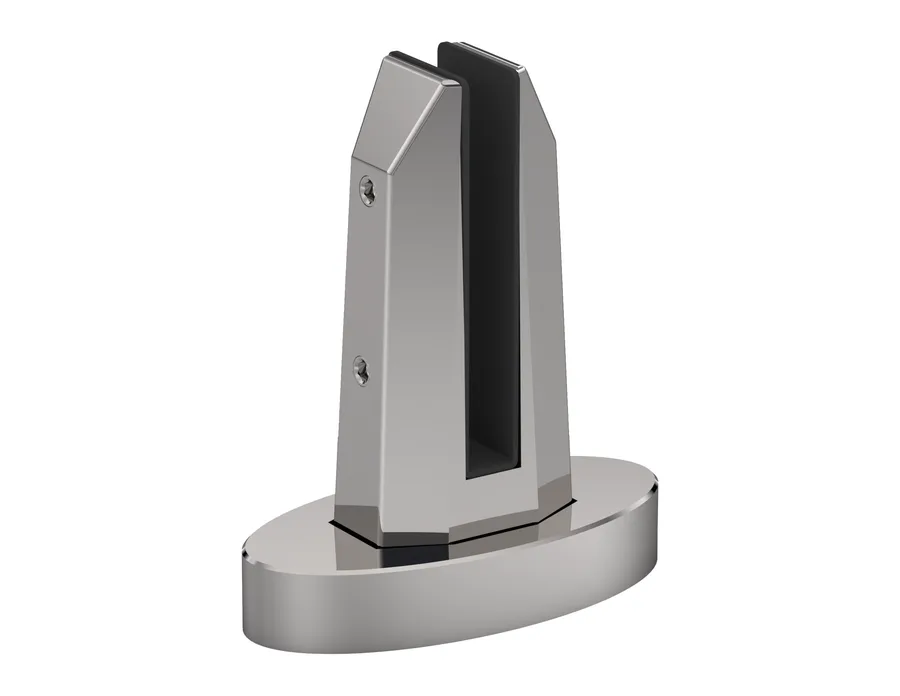
Milford
Surface mount spigot
A slimmer surface-mount profile for a lighter look along long runs of pool fencing.
Best for: Long pool runs and boundaries
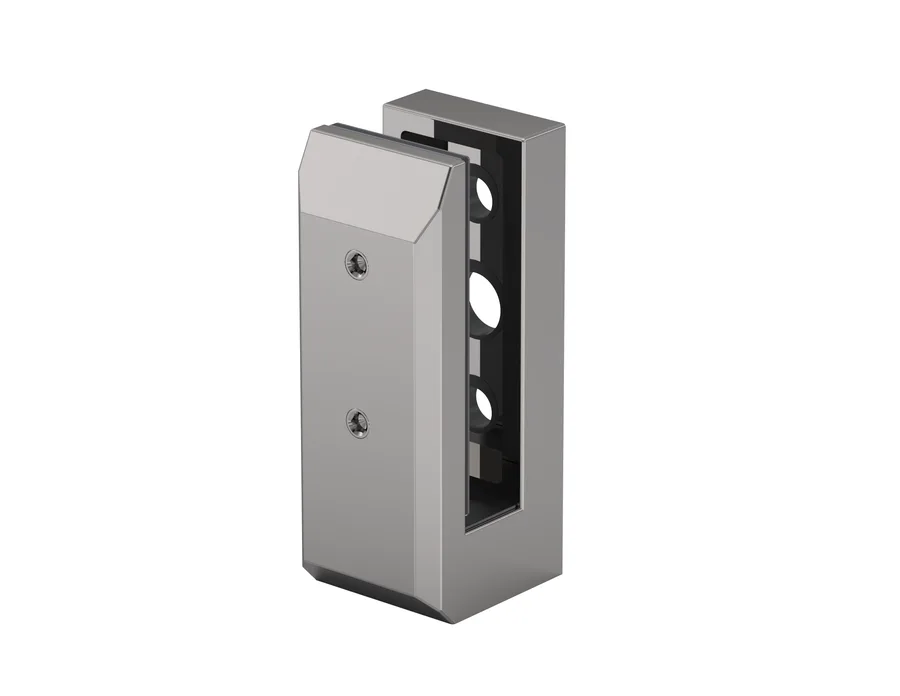
Aoraki
Face mount spigot
Fixes to the face of a deck or slab edge, freeing up the full width of the deck surface.
Best for: Deck edges and balconies
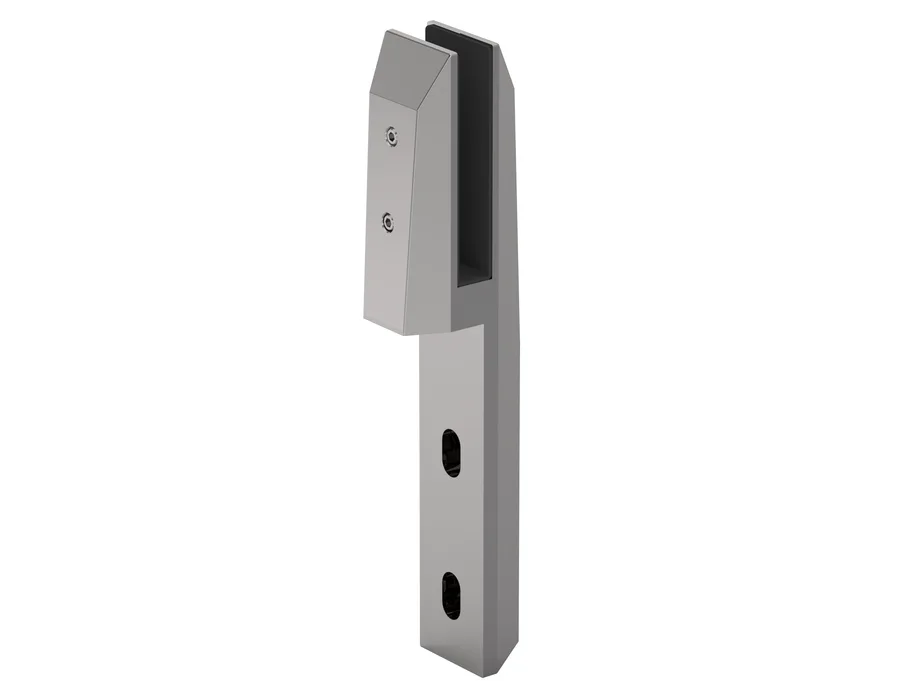
Kaweka
Side mount spigot
Mounts to the side of the structure, keeping the barrier outboard and the deck clear underfoot.
Best for: Balconies and mezzanine edges
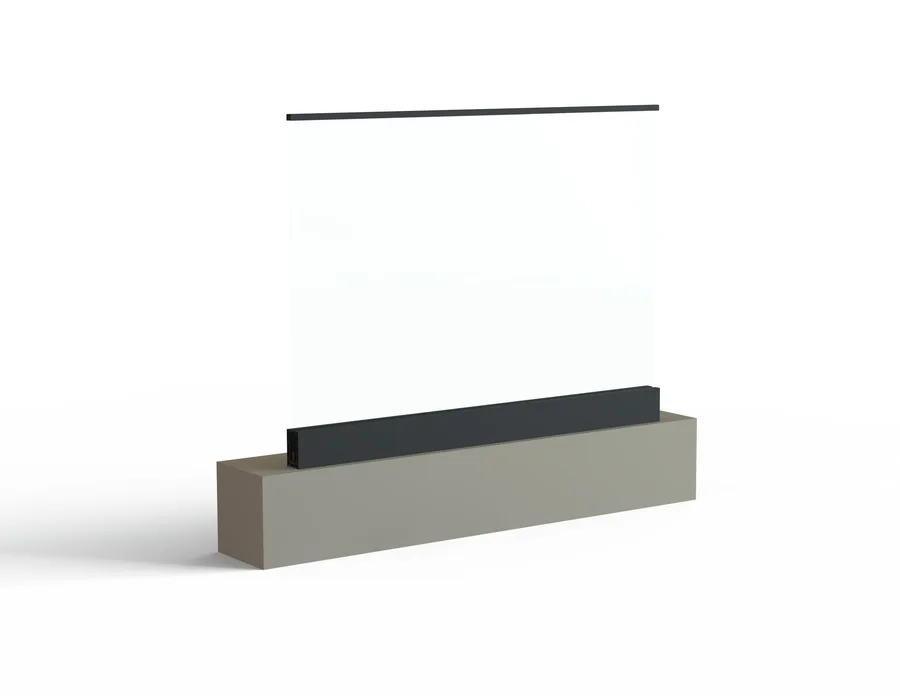
Aspiring
Friction channel system
A continuous base channel that grips the glass along its full length. No visible fixings at all, just a floating pane.
Best for: The most minimal frameless look
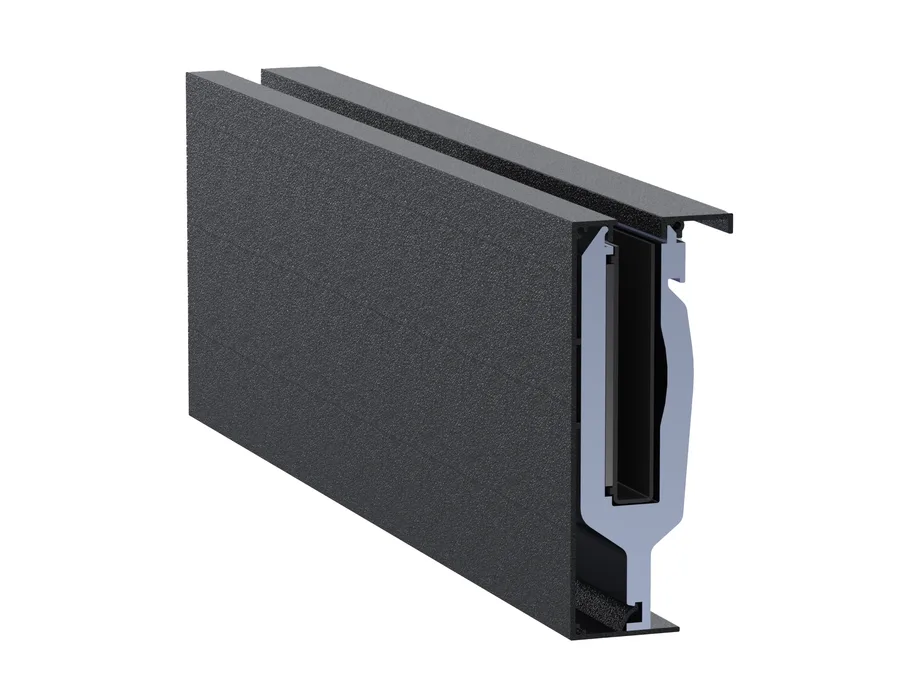
Rakaia
Friction channel system
Channel system in a dark powder-coat finish, for when the base should read as a shadow line rather than metal.
Best for: Dark and architectural schemes
The glass behind the glass.
We install BelAire systems: New Zealand-designed spigots, channels and hardware built for our conditions. Thirty seconds on why that choice matters once the salt air gets to work.
Talk to us about your jobJobs we have finished.
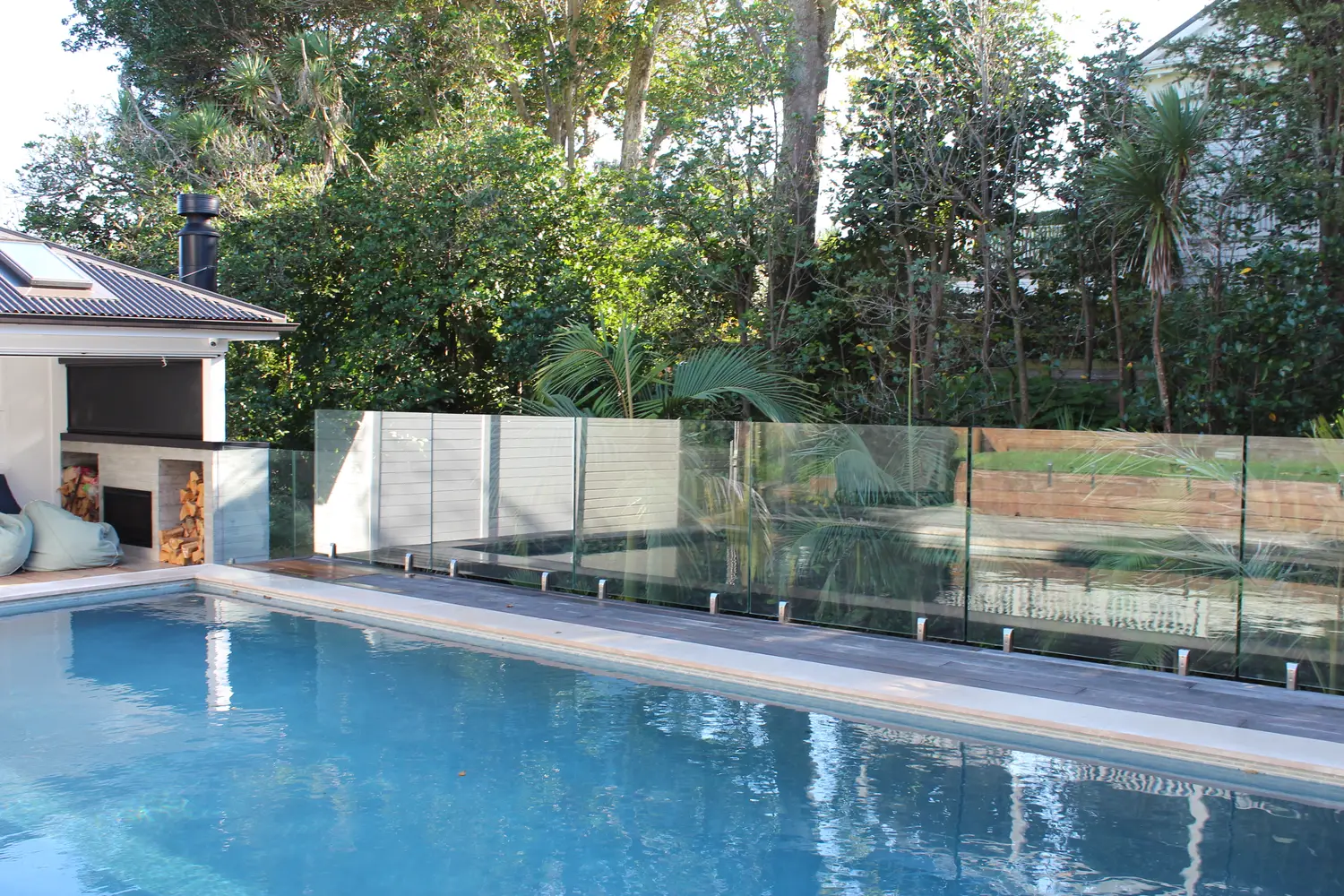
Calliope Road
Devonport, North Shore
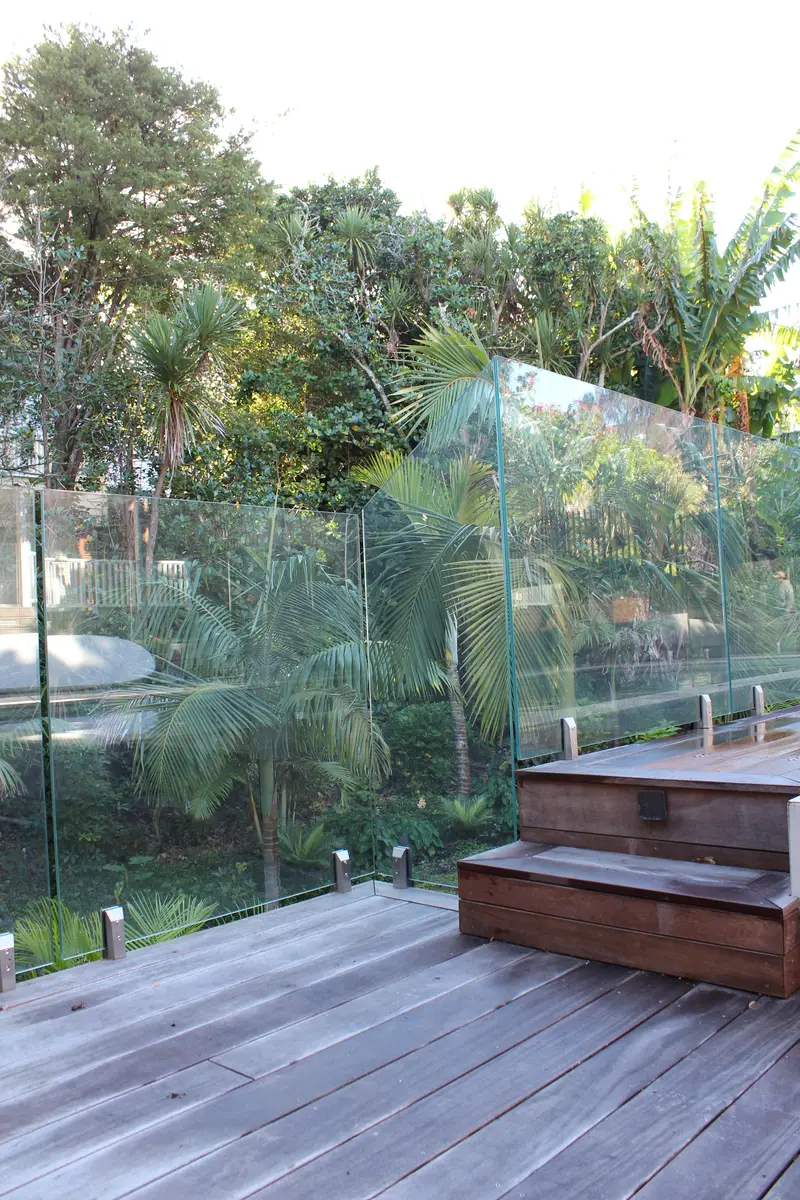
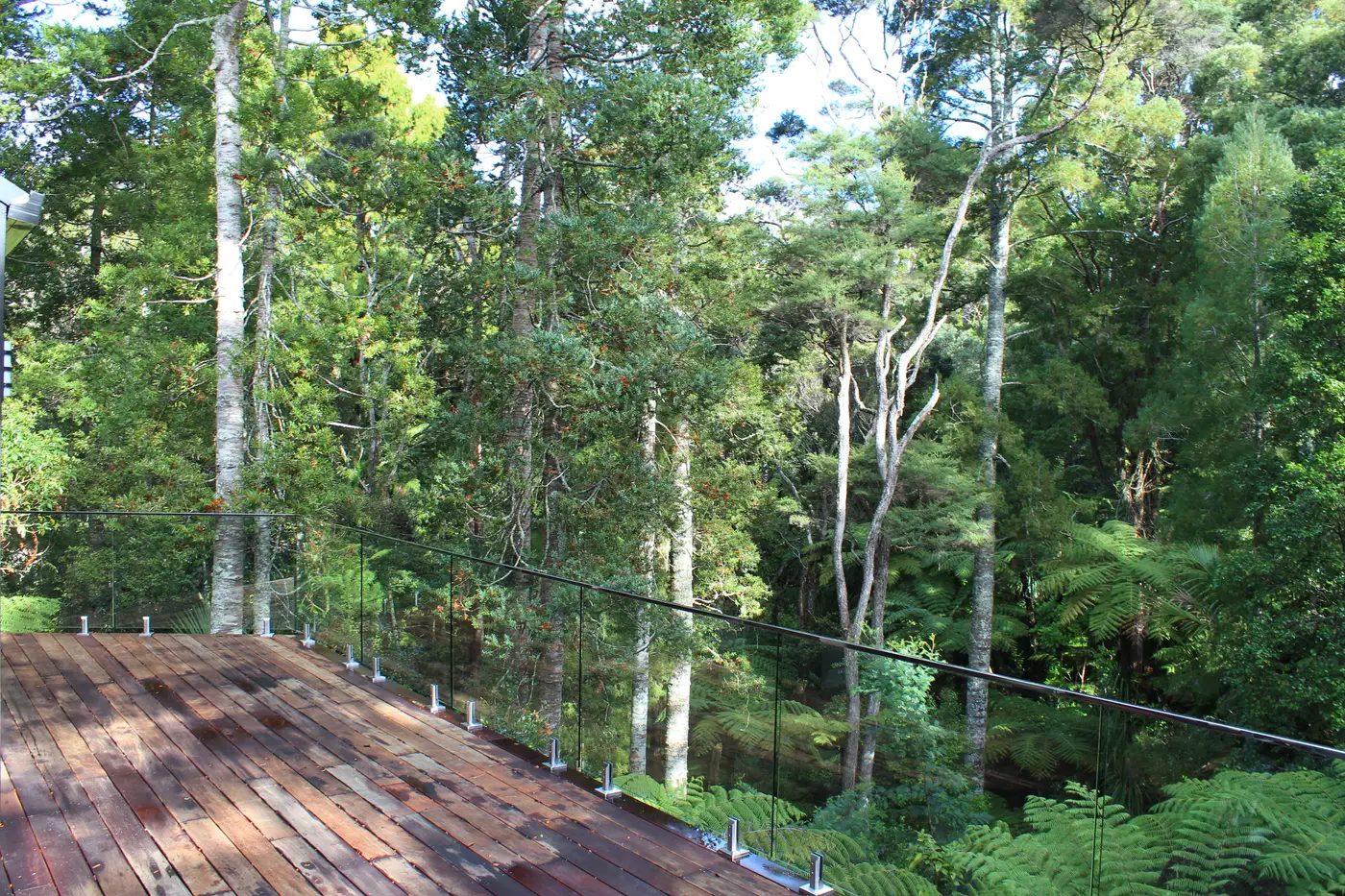
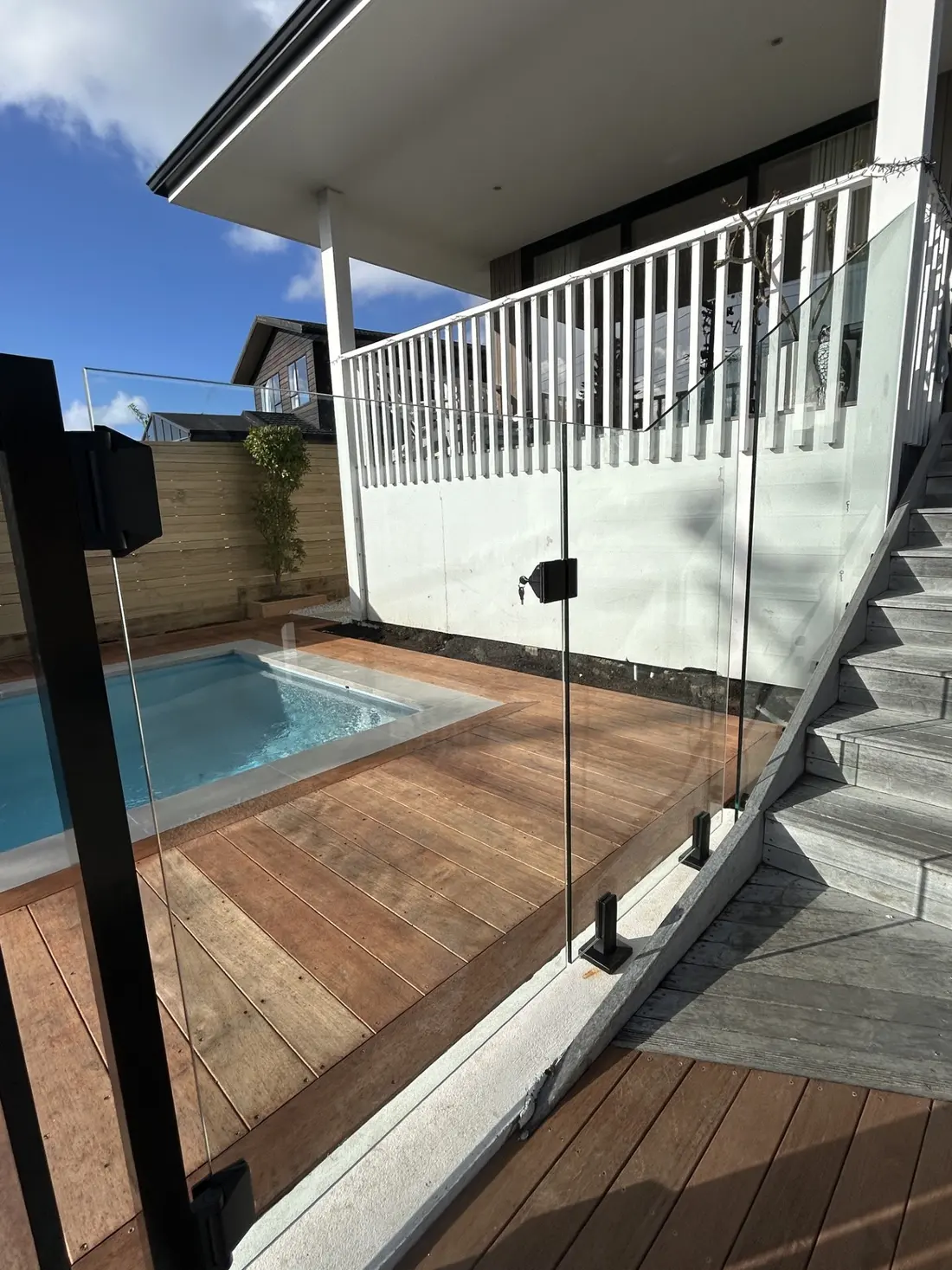
Frameless glass pool fencing and deck balustrade through a mature subtropical garden, where the brief was to lose the barrier and keep the palms.
View the job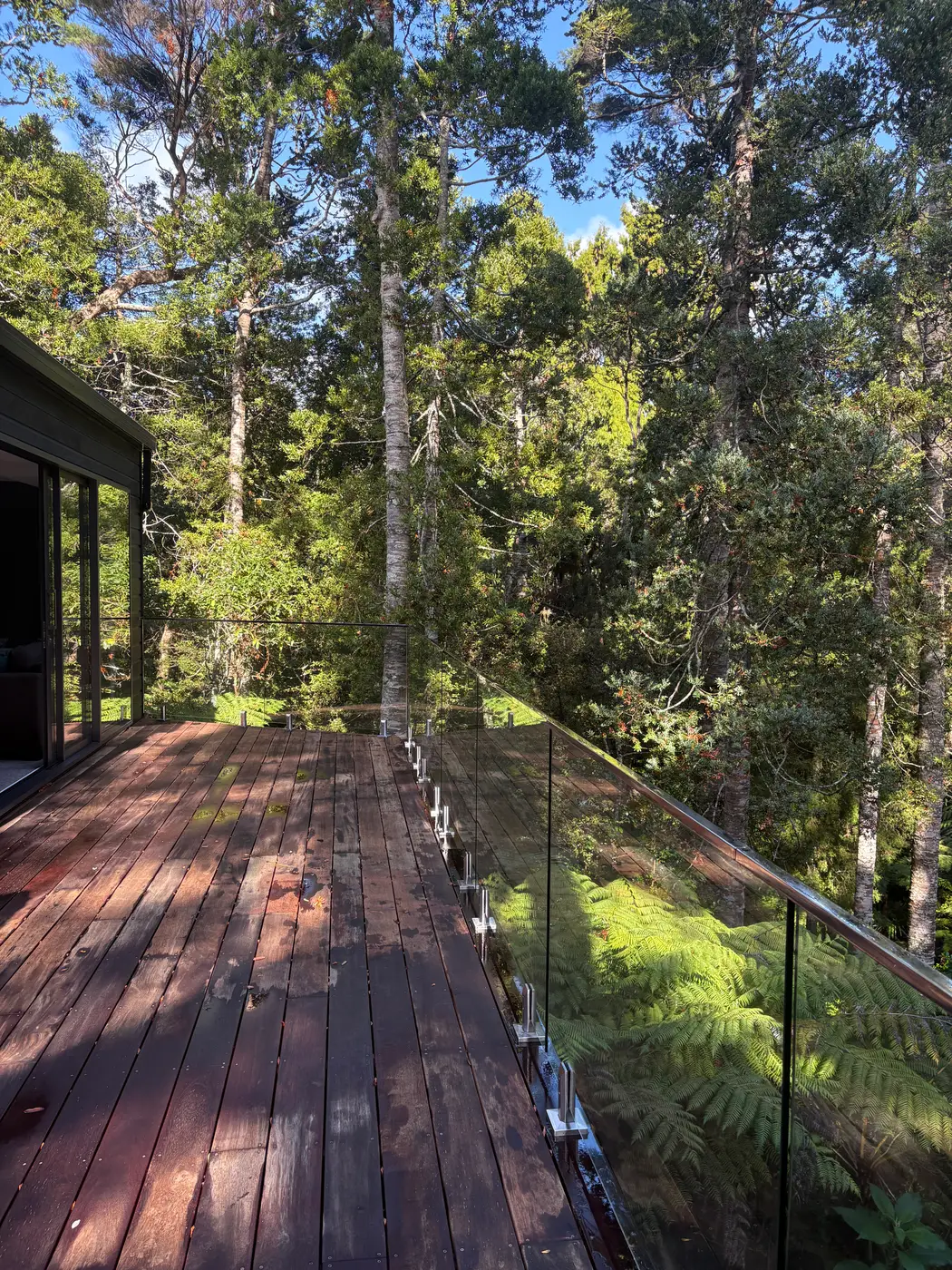
Holdaway Avenue
Auckland
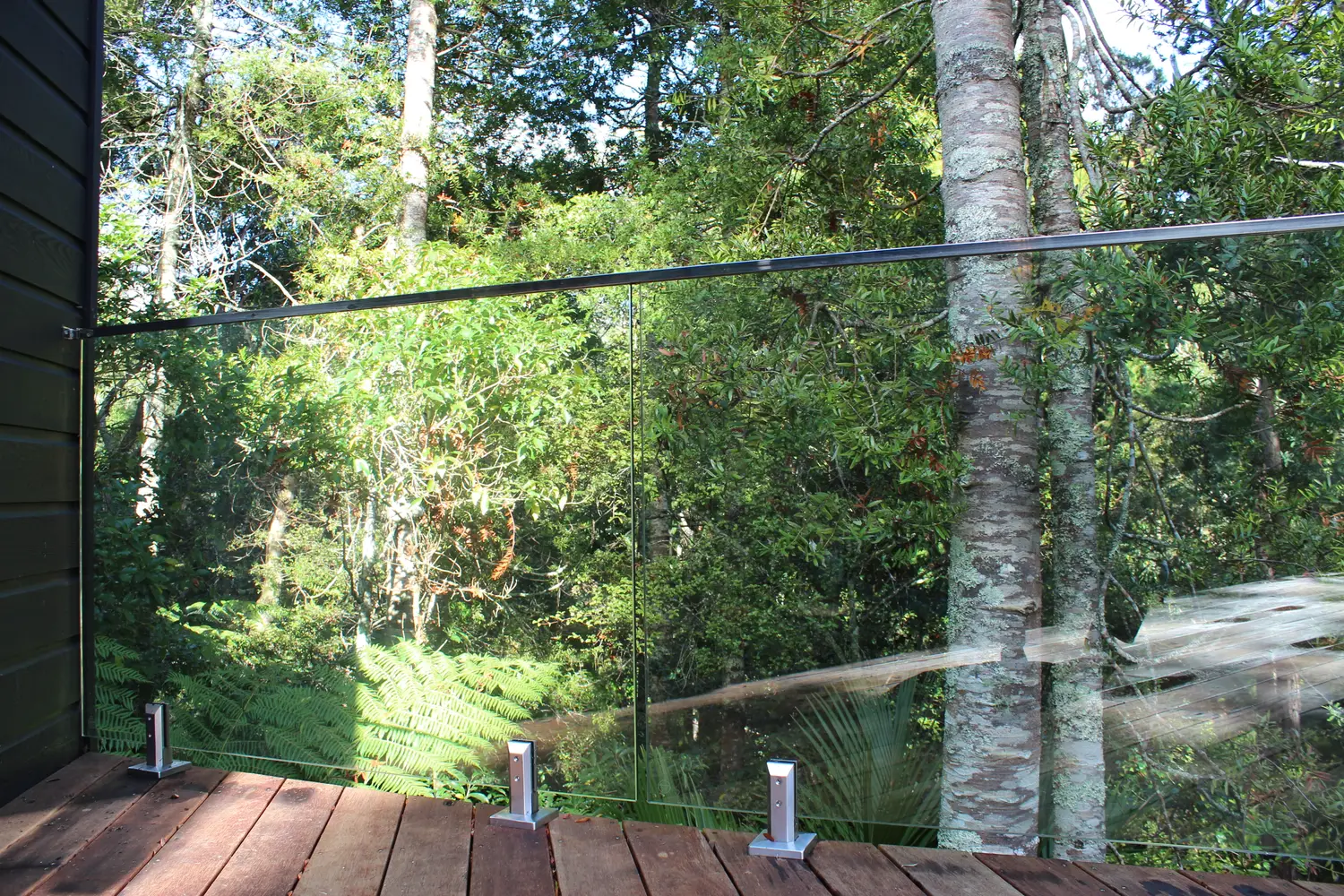
An elevated deck balustrade in native bush, where the glass is doing real barrier duty over a serious drop and still disappears into the ferns.
View the jobKeep scrolling the real jobs.
Done to the standard, not around it.
Balustrades that act as a barrier must meet Building Code Clause F4 (Safety from Falling). As a general guide, the minimum barrier height is 1000mm for decks, balconies and landings, and 900mm alongside stairs, though the required height depends on the fall below and the building use, so we confirm it for your specific site.
The glass itself is Grade A toughened safety glass to AS/NZS 2208, selected and installed to NZS 4223.3:2016, and the barrier is designed to carry the imposed loads set out in AS/NZS 1170. Where frameless glass is the only barrier, current requirements may call for an interlinking handrail or laminated glass, and we will design your balustrade to suit. We can supply PS1 and PS3 producer statements where your consent requires them.
This is a general overview, current at the time of writing. Always confirm the requirements for your project with Auckland Council or your Licensed Building Practitioner.
From measure to sign-off
Free on-site measure
We visit anywhere in greater Auckland, take precise measurements and talk through glass and fixing options for your site.
Clear written quote
A transparent, no-obligation quote. No vague ballparks, and no pressure to take the dearest option.
Made to order
Your glass is toughened to Grade A safety standard and cut to the exact dimensions of the job.
Installed and signed off
A tidy, careful install by our own team, with producer statements supplied where your project needs them.
Questions about glass balustrades
Still unsure about anything? Get in touch and we will talk it through.
What height does a glass balustrade need to be?
It depends on the drop and the use of the building. As a guide, decks, balconies and landings usually need a 1000mm barrier and stairs 900mm, but higher barriers apply above larger falls. We confirm the exact requirement for your site before we quote.
Can a frameless balustrade be the only barrier, with no handrail?
Sometimes, but not always. Under the current glass barrier rules, a fully frameless glass barrier may need an interlinking rail or laminated glass so that a broken panel still restrains a fall. We design each balustrade to meet the rule that applies to your situation.
What glass thickness do you use?
Frameless balustrades are typically 12mm toughened glass, with laminated options where the design calls for it. Semi-frameless post systems often use 8 to 10mm. The right spec depends on panel size, fixing type and loading.
Will the stainless rust near the coast?
Not if it is the right grade. On coastal and exposed Auckland sites we use 316 marine-grade stainless as standard, which stands up to salt air far better than the 304 grade used inland.
Serving every corner of Auckland
All areasGet the view, and the compliance, sorted.
Tell us about your deck, pool or office. We will measure on site across greater Auckland and send a clear written quote, no obligation.